
About Us
Uncover a realm of opportunities.
MOXIE ENERGY is a renewable energy company focused on innovative and sustainable power solutions. Our resilient solutions offer onsite power with world leading green technologies to deliver stable, scalable and sustainable energy solutions to customers.
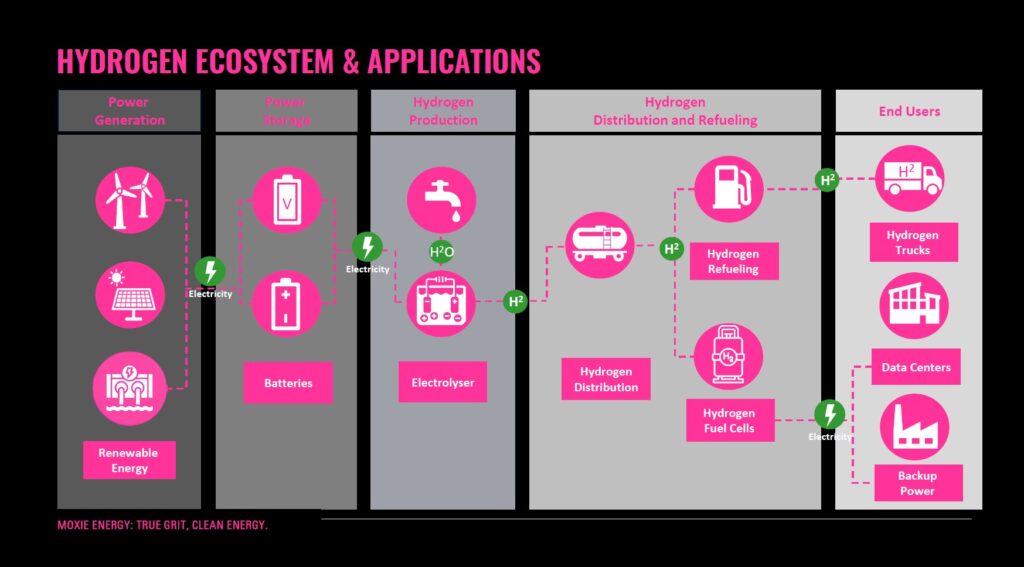
We aspire to become the solution provider that offer end-to-end solutions for hydrogen power using proprietary electrolyzers and cutting-edge hydrogen storage and distribution solutions (R&D).
Harnessing the courage (“Moxie”) to innovate for a sustainable and brighter future.
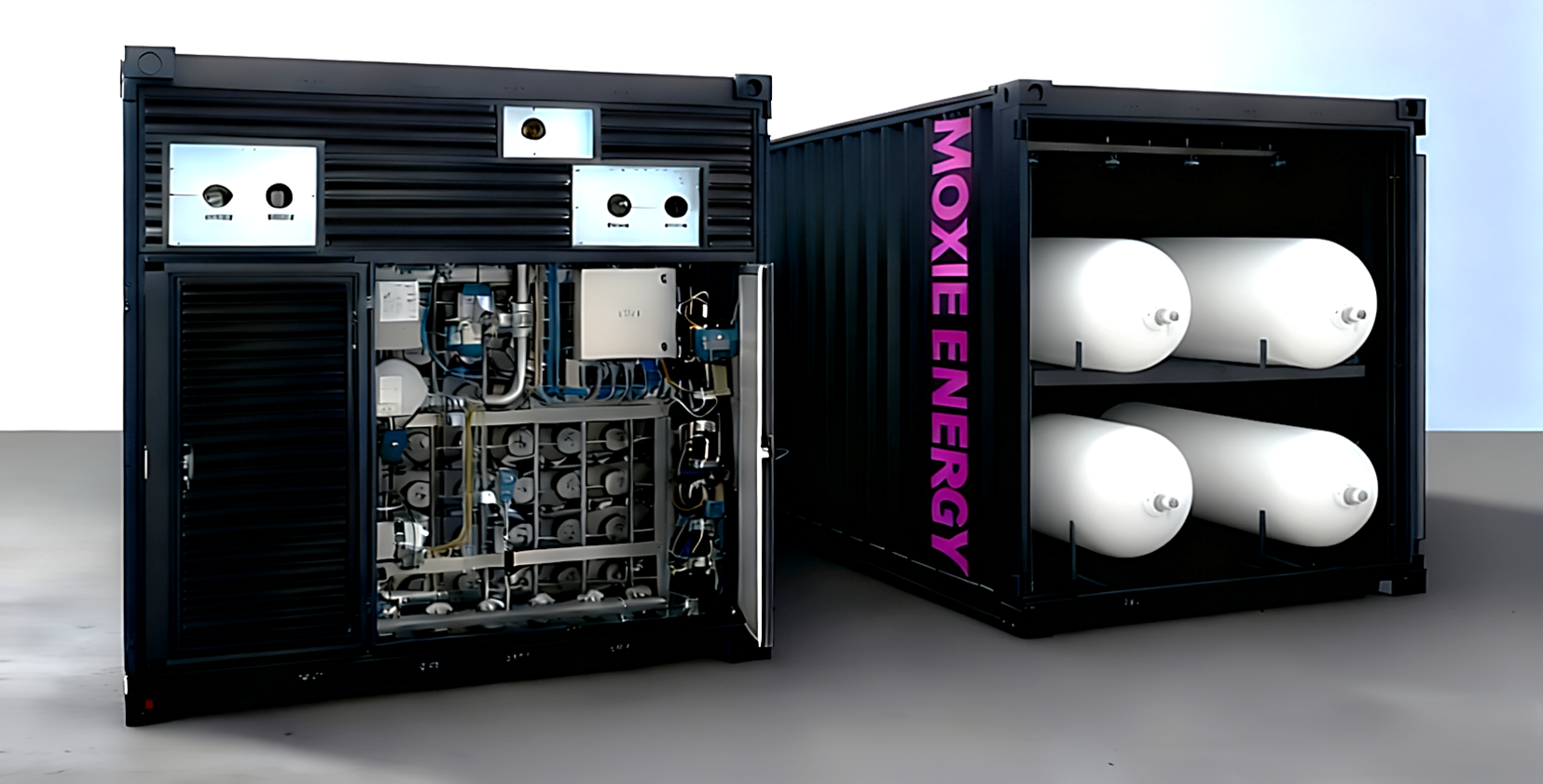
Hydrogen has a very low volumetric energy density at ambient conditions, making it impractical to transport without compression or liquefaction. This requires specialized equipment and energy, which can increase costs and complexity. Traditional method of compression to high pressure of 350 – 700 bar and liquefying at cryogenic temperatures is not economical.
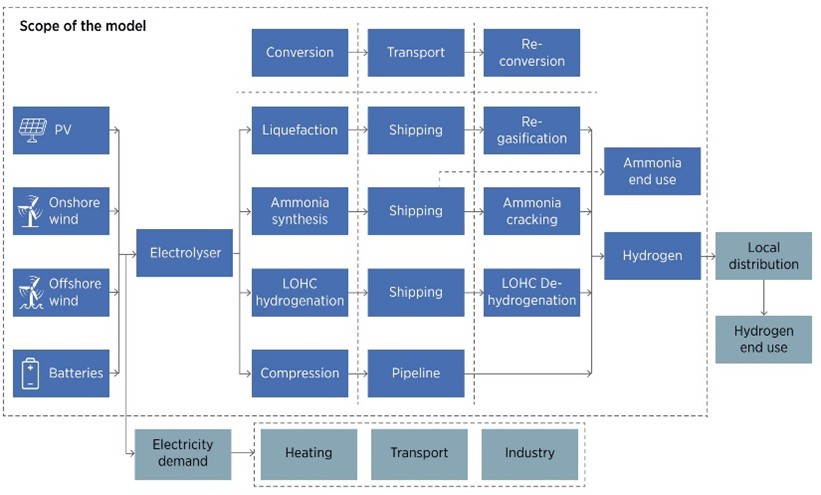
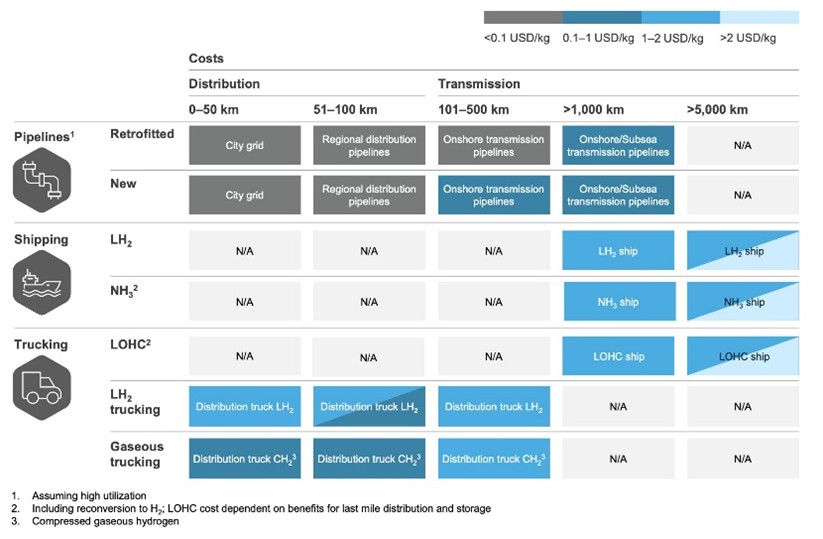
Trucking is considered one of the best options for transporting hydrogen over distances of 101–500 km. While onshore pipelines are generally the most cost-effective method, they are often impractical in many countries due to safety concerns such as metal embrittlement and high flammability. Constructing a new hydrogen pipeline, particularly across soft sand deserts or subsea terrain, necessitates considerable investment and presents substantial logistical and safety challenges.
The transport of hydrogen must adhere to strict safety regulations due to its flammability and the risks associated with leaks. Ensuring the integrity of storage and transport systems is critical to prevent accidents.
Our Solutions
MOXIE ENERGY has designed a state-of-the-art solid-state hydrogen storage that allows for safe, efficient, and compact storage of hydrogen using materials like metal hydrides and metal-organic frameworks.
The prototype has been designed and tested in overseas lab for commercial production.
MOXIE ENERGY’S SOLID-STATE HYDROGEN STORAGE TECHNOLOGY
Lower Operating Pressure
Our hydrogen charging pressure can be controlled below 4 MPa, significantly reducing the safety risks associated with high-pressure hydrogen storage. It can provide stable hydrogen supply within a wide temperature range of 30℃–65℃, maintaining a suitable supply pressure of 0.8–2 MPa, ensuring the stable operation of hydrogen-using our equipment.
Scalable Through Modular Storage Units
Both storage modules use solid-state hydrogen storage technology. By optimizing material layout and thermal management design, high-density hydrogen storage is achieved; the modules can operate simultaneously or independently, supporting flexible start/stop and maintenance, ensuring continuous and stable hydrogen supply.
Intelligent Control and Monitoring
Equipped with a dedicated control cabinet and integrated monitoring system, it collects key parameters of the hydrogen storage modules in real time, including temperature, pressure, and hydrogen absorption/desorption flow, and provides data visualization and abnormal alarms through a human-machine interface.
Multifunctional Safety Assurance
Our Research Capability and International Cooperation
Professor William Bai
MOXIE ENERGY KEY RESEARCH STAFF“ESF Outstanding Young Scientists Programme on Vapour-Phase Synthesis and Processing of Nano-Particle Materials ~ 1996”
- Postdoctoral researcher at Imperial College London. Professor at the Institute of Atomic and Molecular Physics, Sichuan University, and Director of the Expert Committee of the Sichuan New Energy Industry Promotion Association.
- In 1996, he received the European Science Foundation ‘Outstanding Young Scientist Award in the field of Nanomaterials and Catalysts.’ In 2013, he was selected as a Distinguished Expert under China “Thousand Talents Plan”.
- Professor Bai served as a visiting researcher at Delft University of Technology, and a visiting scientist at North Carolina State University. He has led and participated in 8 major research projects, including the European Science Foundation project “Synthesis of New Nanocatalytic Materials CexY1-xO2-δ”, the UK Science and Engineering Research Council project “Low-Temperature Solid-State Fuel Cells”, and the US Department of Energy project “Next-Generation Solid-State Fuel Cells”.
- Professor Bai holds 40 authorized patents: including 4 international invention patents, 4 British invention patents, 6 US invention patents, 2 European invention patents, 4 Chinese invention patents and 20 utility model patents.